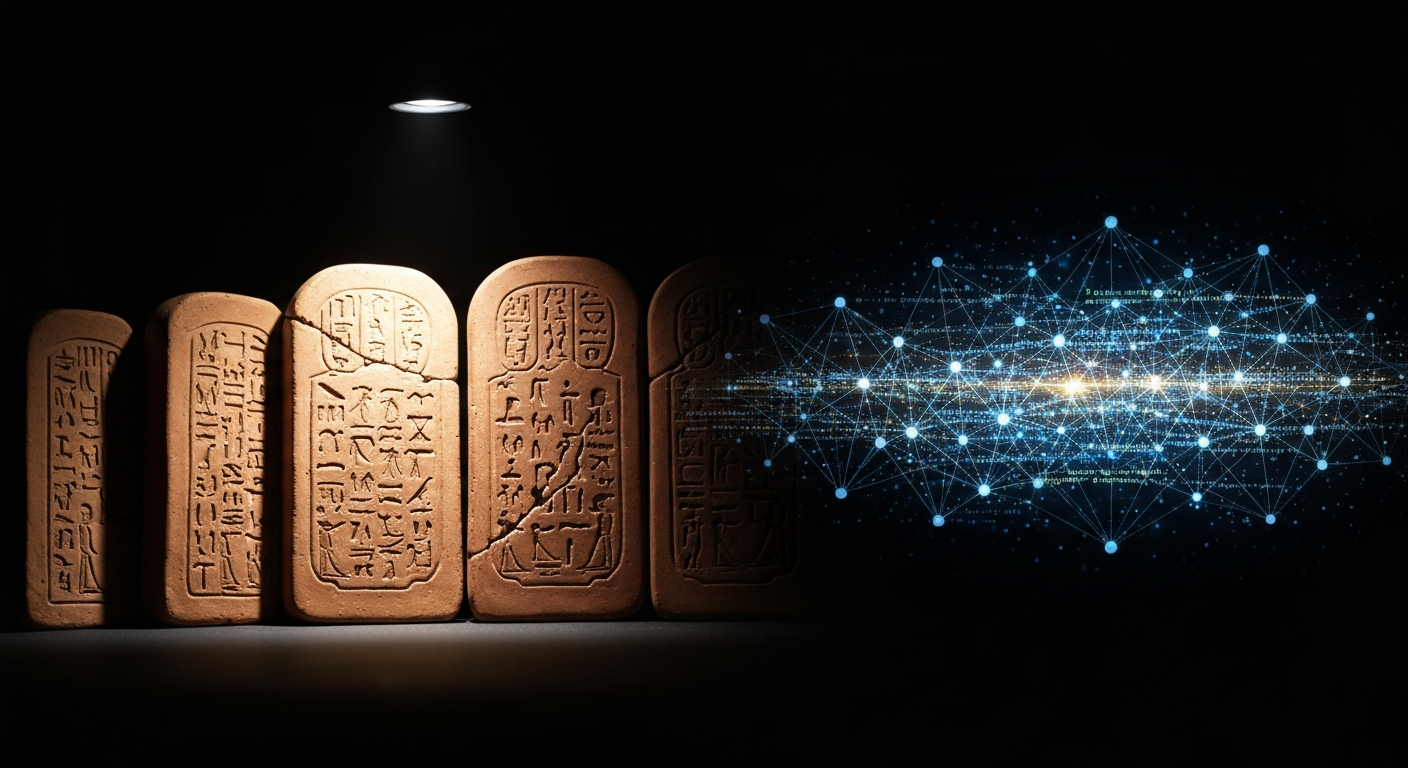
The Evolution of Notarization
From ancient clay tablets to immutable blockchain ledgers. Discover how the technology of trust has evolved over 5,000 years.
3000 BCE
Scribes & Clay Tablets
The earliest form of authenticated records. Scribes in ancient Mesopotamia recorded transactions on clay tablets, using personal cylinder seals to verify identity and intent.
535 CE
The Roman Notarius
Emperor Justinian created the first formalized notary profession. 'Tabelliones' drafted legal documents and 'Notarii' took shorthand notes, establishing the foundation of civil law notaries.
1889
Standardization & Rubber Stamps
The modern rubber stamp was invented, standardizing the notary seal. Physical presence, wet ink signatures, and embossed or inked seals became the global standard for the next century.
2000
ESIGN Act
The US passed the Electronic Signatures in Global and National Commerce Act, granting e-signatures the same legal weight as wet ink. The first step toward digital transformation.
2011
Remote Online Notarization (RON)
Virginia became the first state to legalize RON. Audio-visual technology and Knowledge-Based Authentication (KBA) allowed signers to appear before a notary via webcam.
2024
AI & Blockchain Integration
FloridaCryptoNotary introduces the next evolution: AI-driven fraud detection, biometric liveness checks, and Hedera Hashgraph immutable ledger storage. Trust is now mathematically guaranteed.
Experience the Future of Trust
Don't rely on 19th-century technology for 21st-century transactions. Upgrade to AI-powered, blockchain-verified notarization today.